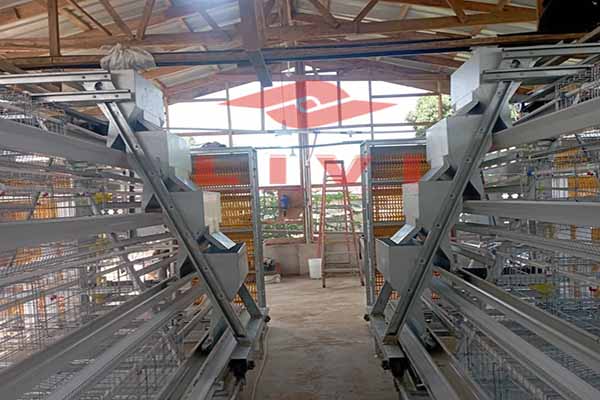

As Nigeria’s demand for high-quality eggs continues to rise, more commercial farmers are turning to modern poultry production systems to increase efficiency, reduce losses, and boost profitability. For those planning a 20000 layers poultry farm in Nigeria, building a properly designed chicken house with the right equipment is critical for long-term success.
This comprehensive guide explains how to build a chicken farm in Nigeria, covering housing design, equipment choices, ventilation planning, automation options, management practices, and real-world examples from Africa’s poultry industry. Whether you are a new investor or upgrading an existing farm, the following insights will help you establish a high-performing, cost-efficient layer operation.
Planning the Infrastructure for a 20000 Layers Poultry Farm in Nigeria
Before construction begins, you must define the core requirements of a commercial layer farm. A standard 20,000-bird layer house needs to ensure optimal bird comfort, efficient egg collection, and proper biosecurity.
Key Planning Considerations
- Adequate land with good road access
- Stable water and electricity sources
- East-west building orientation to reduce heat load
- Controlled ventilation for Nigeria’s warm climate
- Drainage system to manage rainfall and wastewater
- Isolation distance from residential areas
- Sufficient spacing between poultry houses for biosecurity
A common mistake many new poultry investors make is underestimating space and ventilation requirements. Tight spacing limits future expansion and increases disease risk, so planning ahead is crucial.
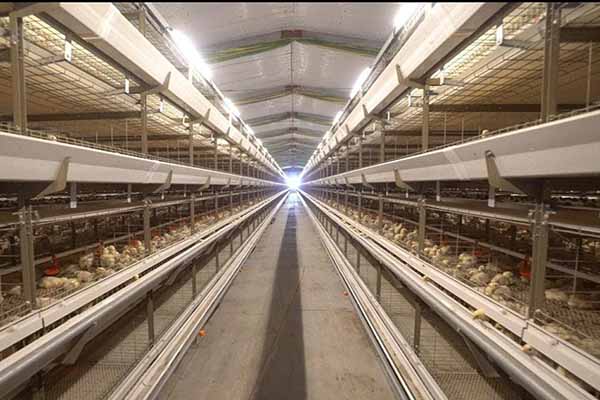
Building a Modern 20000 Layers Poultry Farm in Nigeria
House Dimensions and Space Requirements for 20,000 Layers
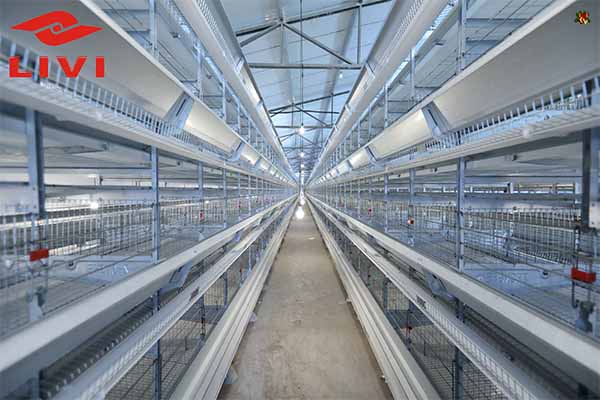
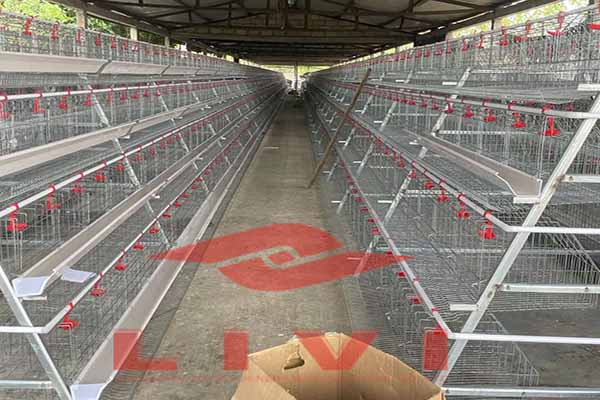
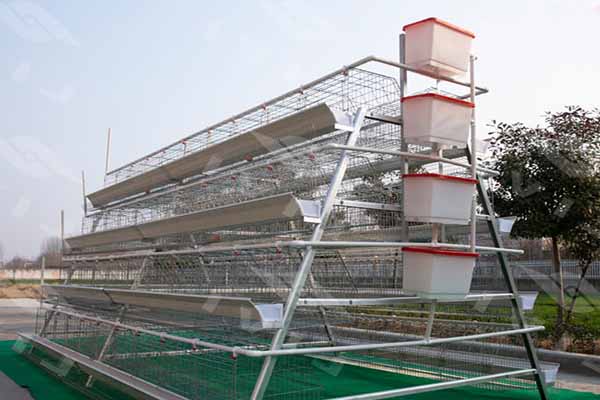
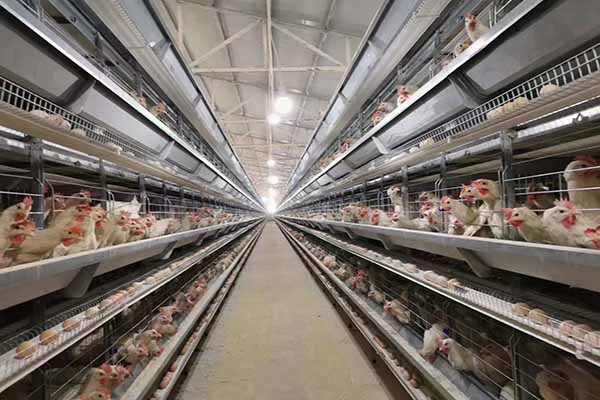
The size of your poultry house depends largely on your cage system choice. Most modern commercial farms use A type layer battery cages or H type layer battery cages, both of which maximize stocking density while maintaining bird welfare.
Recommended House Size (Approximate)
- A-type layer cages: 65–75 meters long × 12–14 meters wide
- H-type layer cages: 55–65 meters long × 8–10 meters wide (more compact)
Why Cage Systems Reduce Space Requirements
Battery cage systems:
- Optimize vertical space
- Improve egg quality
- Reduce feed waste
- Enable automated manure cleaning
- Allow precise management of 20,000 birds with fewer workers
For hot climates like Nigeria, H-type cages offer better ventilation control because they reduce the distance between aisles and support fully automated cooling systems.
Choosing the Right Cage System: A-Type vs H-Type Layer Cages
The choice between A-type layer battery cages and H-type layer battery cages plays a major role in farm layout, capital investment, and automation level.
Comparison Table: A-Type vs H-Type Systems
| Feature | A-Type Layer Cages | H-Type Layer Cages |
|---|---|---|
| Bird Density | Medium | High |
| Automation Level | Semi to Fully Automated | Fully Automated |
| Manure Removal | Belt or scraper | Belt system |
| Ventilation | Natural or mechanical | Strong mechanical ventilation |
| House Size Required | Larger | More compact |
| Ideal For | Medium-size farms | Large farms (10,000–100,000+ layers) |
| Maintenance | Simple | More advanced |
| Cost | Lower | Higher upfront |
For a 20000 layers poultry farm in Nigeria, H-type cages are increasingly popular due to:
- Higher stocking capacity
- Better airflow control
- Lower disease risk
- Compatibility with automated feeding, drinking, manure cleaning, and egg collection
However, A-type cages are still suitable for farms with lower initial budgets or limited access to fully automated equipment.
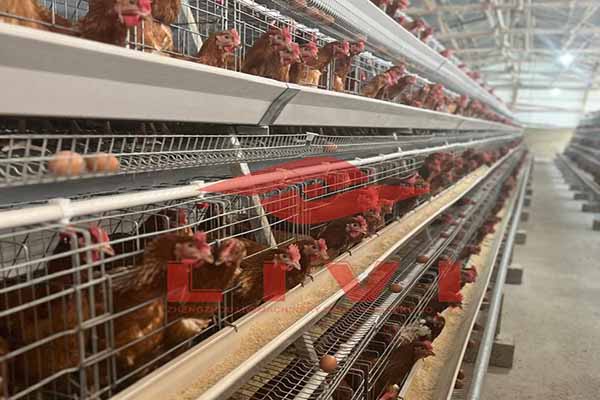
Building a Modern 20000 Layers Poultry Farm in Nigeria
Critical Construction Components of a 20,000-Layer Chicken House
To successfully build a chicken farm in Nigeria, focus on engineering a durable and efficient structure.
1. Foundation and Flooring
- Reinforced concrete foundation
- 1–1.5% slope for drainage
- Smooth washable floor surface for hygiene
2. Roofing
- Anti-heat roofing sheets
- Insulation layer for temperature control
- Overhang extension to reduce rain splash
3. Ventilation System
For a 20,000-bird farm, a mixed ventilation system is ideal:
- Exhaust fans
- Cooling pads
- Adjustable air inlets
- Ridge ventilation openings
Mechanical ventilation is recommended for H-type cage houses due to higher stocking density.
4. Lighting System
Proper lighting increases egg production consistency.
Recommended:
- 14–16 hours of light daily
- LED lights with uniform distribution
- Controlled dimmer system
5. Feeding and Drinking Lines
Automated feeding and nipple drinking systems ensure:
- Reduced feed waste
- Stable water supply
- Consistent growth performance
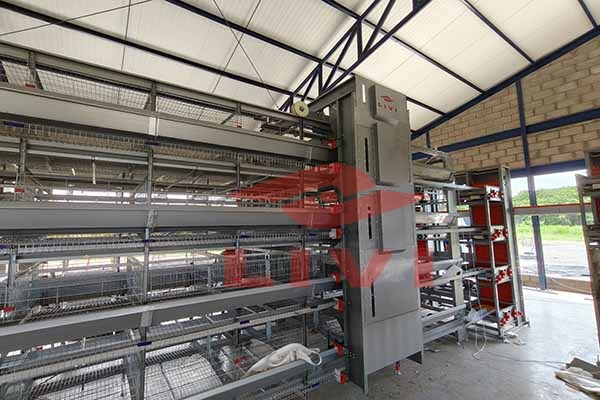
Automatic Layer Battery Cages
Essential Management Tips for a 20,000-Layer Poultry Farm in Nigeria
Daily Tasks
- Monitor feed and water consumption
- Check ventilation and temperature
- Remove any dead birds immediately
- Inspect egg quality and production rate
- Ensure belt manure removal operates properly
Weekly Tasks
- Disinfect aisles and equipment
- Review bird weight and shell quality
- Adjust lighting and feeding programs
Biosecurity Best Practices
- Footbaths at all entrances
- Restricted visitor access
- All-in, all-out management
- Rodent and insect control
- Clean water treatment system
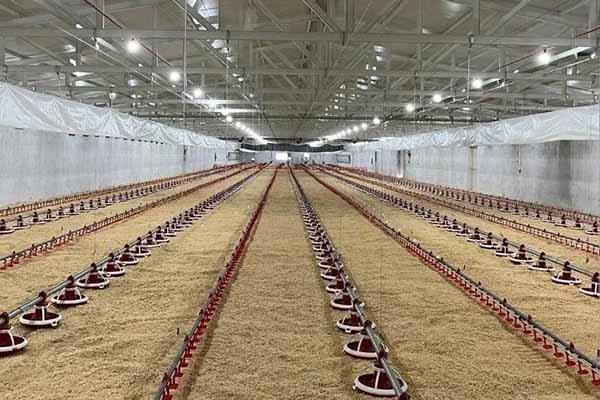
Automated Layer Systems vs Traditional Deep Litter Housing
| Category | Automated Layer Cages | Traditional Deep Litter |
|---|---|---|
| Space Utilization | Excellent | Low |
| Egg Cleanliness | Very high | Low (floor eggs) |
| Labor Requirement | Very low | High |
| Disease Control | Strong | Weak |
| Feed Efficiency | High | Low |
| Manure Management | Automated belts | Manual |
| Egg Production | Higher consistency | Moderate |
Automation significantly enhances productivity, especially on large farms.
Real Case Example: How LIVI Machinery Supports Large Farms in Nigeria
LIVI Machinery has delivered poultry equipment to 80+ countries, including extensive installations in Nigeria.
Example: 100,000 Layers Farm in Ogun State
- Used H-type fully automated cages
- Achieved 95–96% peak egg production
- Reduced labor cost by over 60%
- Automated manure handling improved hygiene
- Energy-efficient ventilation reduced heat stress losses
Example: 20,000 Layers Farm in Abuja
- A-type layer cage system with automated feeding
- Farm achieved payback in 14 months
- Egg breakage reduced by 35% compared to old system
These examples show the importance of choosing the right equipment supplier and modern farming methods.
FAQ: Common Questions About Building a Chicken Farm in Nigeria
1. How much land is required for a 20,000-layer poultry house?
Approximately 0.5–1 acre including the building, roads, and service areas.
2. What is the best cage system for hot regions like Nigeria?
H-type cages with mechanical ventilation offer better climate control.
3. How long does it take to complete a 20,000-layer poultry house?
Typically 45–90 days depending on construction speed and equipment availability.
4. How much feed does a 20,000-layer farm consume daily?
About 2,200–2,400 kg per day during peak production.
5. Can automation reduce farm labor costs?
Yes, automated systems reduce labor needs by 50–70%, especially in feeding and manure handling.
Final Thoughts: Build a Successful 20000 Layers Poultry Farm in Nigeria
A well-planned and correctly equipped poultry house determines the long-term profitability of your farm. Whether you choose A type layer battery cages or H type layer battery cages, the key is selecting reliable equipment, proper ventilation, and a layout that supports efficient egg production.
If you are ready to build a chicken farm in Nigeria or need professional guidance on equipment selection, design layout, or cost estimation, LIVI Machinery can support you with customized solutions.
CTA — Get Professional Support
Get a free quote, poultry house design, and equipment consultation today.
📩 Contact us via email: [email protected]
🌍 LIVI Machinery – Trusted by Poultry Farmers in 80+ Countries