
Quick Answer
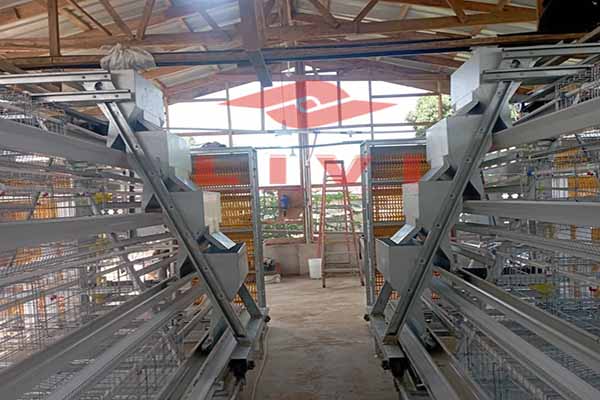
An H Type Layer Cage System helps commercial egg farms improve production efficiency by combining optimized cage design, automatic feeding, manure management, egg collection, and climate control.
Compared with traditional cage systems, H-type layer cages can help farms reduce feather damage, improve hygiene, control ammonia accumulation, reduce heat stress, and achieve more stable egg production.
However, better cages alone do not guarantee better results.
Successful modern egg farming depends on the combination of:
- Proper cage design
- Automated equipment
- Ventilation management
- Feed and water systems
- Manure handling
- Daily farm operation
Introduction: Why Modern Egg Farms Need Better Production Systems
The global egg industry is moving toward larger and more automated farms.
Commercial producers are facing several challenges:
- Increasing labor costs
- Shortage of skilled workers
- Higher biosecurity requirements
- Rising operating expenses
- Extreme climate conditions
- Pressure for stable egg production
Traditional cage systems may become difficult to manage as farm size expands.
Large-scale layer farms increasingly require:
- Higher automation
- Better land utilization
- Cleaner production environments
- Easier flock management
- Lower operating costs
This is why many producers are upgrading to modern H Type Layer Cage Systems and complete automatic poultry farming systems.
What Is an H Type Layer Cage System?
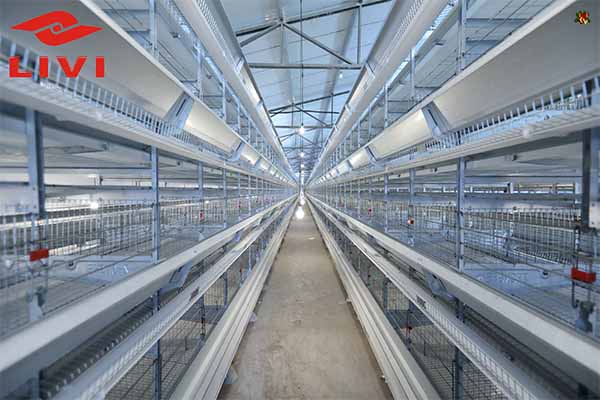
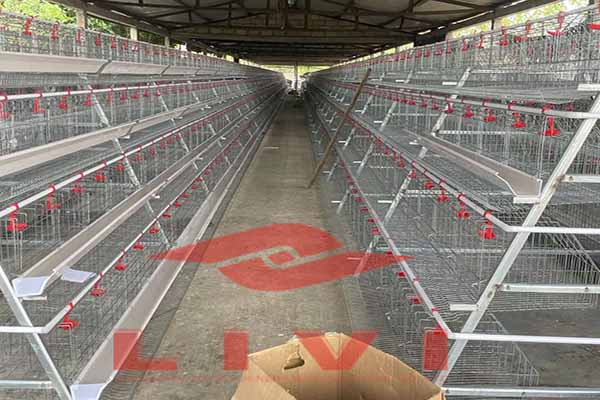
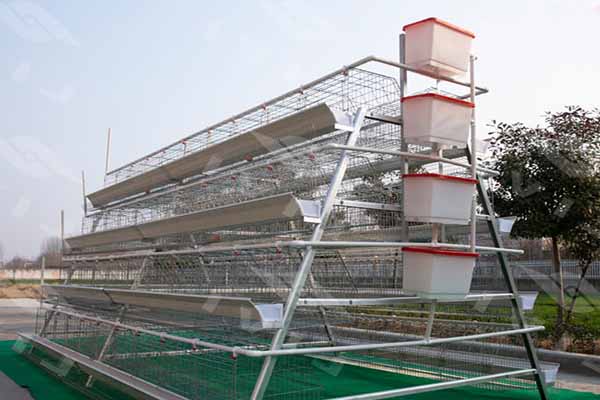
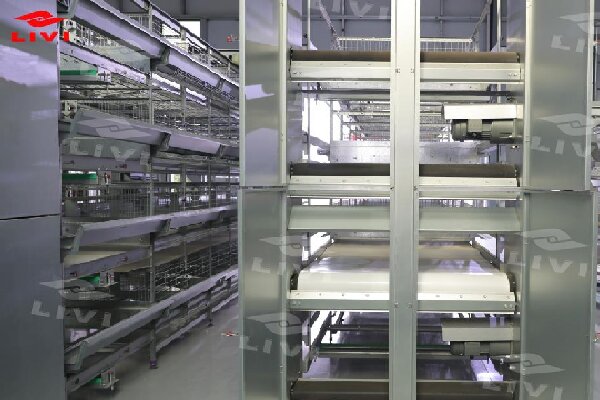
An H Type Layer Cage System is a multi-tier poultry housing system designed for intensive commercial egg production.
The “H” structure allows multiple cage tiers to be arranged vertically, improving space utilization while supporting automated farm management.
A complete automatic layer cage system normally includes:
| System | Function |
|---|---|
| Layer Cage Structure | Provides efficient bird housing |
| Automatic Feeding System | Ensures consistent feed delivery |
| Nipple Drinking System | Provides clean and reliable water |
| Automatic Manure Removal System | Reduces manure accumulation |
| Automatic Egg Collection System | Improves labor efficiency |
| Poultry Climate Control System | Maintains temperature and air quality |
The goal is not simply increasing bird numbers but creating a stable and controllable production environment.
Case Study: 30,000-Layer Farm Upgrade in Sierra Leone
Challenge
A commercial egg farm in Sierra Leone planned to expand production while facing several operational challenges:
- High labor dependence
- Manual manure handling
- Difficult flock management
- Limited production efficiency
Solution
The farm upgraded to an H Type Layer Cage System equipped with:
- Automatic feeding
- Automatic egg collection
- Automatic manure removal
- Environmental control equipment
Results
| Item | Before Upgrade | After Upgrade |
|---|---|---|
| Farm Management | Manual | Automated |
| Egg Collection | Manual | Automatic |
| Manure Handling | Manual Cleaning | Automatic Removal |
| Labor Requirement | High | Significantly Reduced |
| Production Density | Limited | Higher Capacity |
The project demonstrated how a complete layer farm equipment solution can improve management efficiency and production performance.
Why Do Laying Hens Lose Feathers?
Many farmers ask:
How can layer farms reduce feather loss?
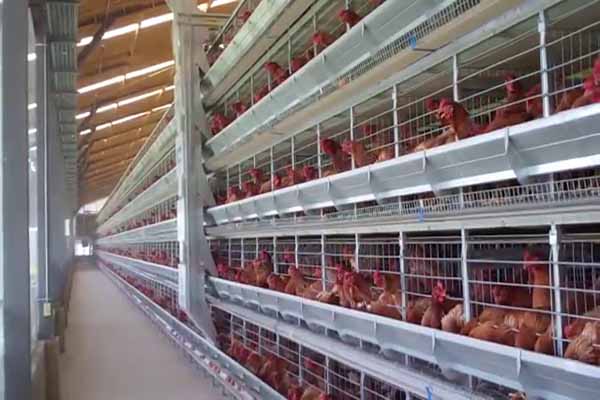
Feather loss is usually caused by multiple factors:
- Cage surface quality
- Stocking density
- Bird behavior
- Environmental stress
- Poor air quality
The cage itself is not always the direct cause.
A properly designed H Type Layer Cage System combined with good management practices can significantly reduce feather damage.
Cage Surface Quality and Feather Protection
Laying hens remain in contact with cage wire throughout the production cycle.
Poor cage wire quality may increase:
- Feather abrasion
- Skin irritation
- Corrosion damage
- Structural wear
A high-quality layer cage should provide:
- Smooth wire finishing
- Strong corrosion resistance
- Long service life
- Better bird comfort
Cage Wire Comparison
| Material | Characteristics | Application |
|---|---|---|
| Electro-Galvanized Wire | Basic protection | Small farms |
| Hot-Dip Galvanized Wire | Better durability | Commercial farms |
| Zinc-Aluminum Coated Wire | Superior corrosion resistance | Humid regions |
Stocking Density and Feather Pecking Behavior
Stocking density directly affects bird behavior.
Excessive stocking density may lead to:
- Feather pecking
- Aggression
- Feed competition
- Reduced flock uniformity
Modern H Type systems focus on balancing production density with bird comfort and airflow.
How Do H Type Layer Cage Systems Help Prevent Disease?
Disease prevention is one of the most important challenges in commercial egg production.
A major advantage of H Type systems is improved manure management.
Modern cage systems help reduce exposure to:
- Ammonia
- Bacteria
- Flies
- Contaminated surfaces
Automatic Manure Removal Improves Farm Hygiene
Automatic manure belts remove waste regularly, reducing manure accumulation inside the poultry house.
Benefits include:
- Cleaner environment
- Better biosecurity
- Reduced ammonia generation
- Improved flock health
Case Study: Ammonia Reduction in a 200,000-Layer Farm
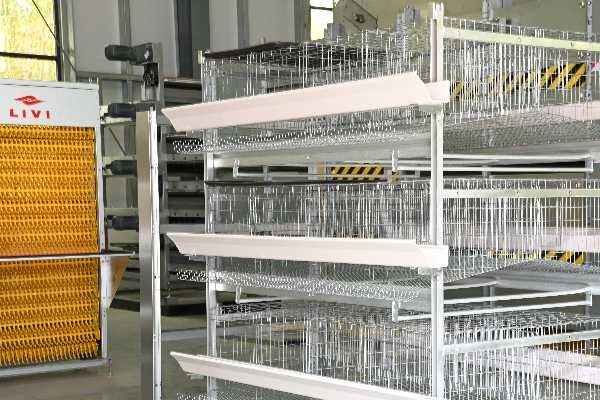
A large-scale egg farm struggled with ammonia accumulation during summer.
After upgrading manure handling and ventilation systems:
| Indicator | Improvement |
|---|---|
| Ammonia Levels | Significantly Reduced |
| Air Quality | Improved |
| Bird Comfort | Enhanced |
| Production Stability | Improved |
This project highlights the importance of combining manure management and ventilation systems.
How Can Layer Farms Control Ammonia in Poultry Houses?
Effective ammonia control requires:
Automatic Manure Removal
Reduces ammonia production at the source.
Proper Ventilation
Removes contaminated air and supplies fresh air.
Environmental Monitoring
Tracks:
- Temperature
- Humidity
- Air quality
A poultry climate control system is essential for modern egg production.
How Does H Type Layer Cage Help Reduce Heat Stress?
Heat stress is a major challenge in tropical and hot-climate regions.
Common consequences include:
- Lower feed intake
- Reduced egg production
- Poor eggshell quality
- Higher mortality risk
Modern layer farms typically combine:
- Tunnel ventilation
- Cooling pads
- Environmental controllers
- Water management systems
Case Study: Heat Stress Control in a Tropical Layer Farm
A tropical layer farm installed:
- H Type Layer Cage System
- Tunnel ventilation system
- Cooling pads
- Climate control equipment
Results
| Indicator | Before | After |
|---|---|---|
| Summer Temperature | High | More Stable |
| Heat Stress Impact | Severe | Reduced |
| Egg Production Stability | Lower | Improved |
The project demonstrated the value of integrating housing and climate-control systems.
H Type Layer Cage vs A Type Cage: Key Differences
| Factor | A Type Cage | H Type Layer Cage |
|---|---|---|
| Space Utilization | Standard | Higher |
| Automation | Limited | High |
| Labor Requirement | Higher | Lower |
| Manure Management | Manual | Automatic |
| Climate Control Integration | Limited | Better |
| Expansion Potential | Moderate | Excellent |
What Automation Systems Are Used in Modern Layer Farms?
Automatic Feeding System
Provides consistent feed delivery while reducing labor.
Nipple Drinking System
Provides clean and reliable water supply.
Automatic Egg Collection System
Improves collection efficiency and reduces labor.
Poultry Climate Control System
Maintains temperature, humidity, and air quality.
Who Should Consider an H Type Layer Cage System?
This system is ideal for:
Commercial Egg Farms
Managing thousands to hundreds of thousands of layers.
Farms Upgrading Traditional Systems
Seeking better automation and environmental control.
New Poultry Farm Projects
Planning complete egg production systems.
Hot Climate Regions
Where heat stress management is critical.
Frequently Asked Questions
How does H Type Layer Cage reduce disease risk?
H Type systems improve manure management, reduce ammonia accumulation, and create cleaner production conditions.
What is the best cage system for commercial egg farms?
The best system depends on farm size, climate, and automation requirements. H Type systems are often preferred for medium and large-scale projects.
How can layer farms reduce ammonia?
By combining automatic manure removal, proper ventilation, and environmental monitoring.
Can H Type Layer Cage Systems work in hot climates?
Yes. They can be combined with tunnel ventilation and cooling pads for effective heat-stress control.
How long do H Type Layer Cage Systems last?
High-quality galvanized systems can provide long service life with proper maintenance.
What equipment is needed for automatic egg production?
A complete system typically includes:
- Layer cages
- Feeding system
- Drinking system
- Egg collection system
- Manure removal system
- Climate control system
Conclusion
Modern egg production is no longer only about choosing a cage.
A successful commercial layer farm requires the integration of:
- Cage design
- Automation systems
- Manure management
- Ventilation
- Climate control
- Daily management
An H Type Layer Cage System provides the foundation for modern poultry production by improving automation, hygiene, and environmental control.
When properly designed and managed, these systems help farms address:
- Feather loss
- Disease pressure
- Ammonia problems
- Heat stress
- Labor shortages
The future of egg farming lies in complete production systems where equipment, environment, and management work together.
Request a Customized Layer Farm Solution
Looking for a complete H Type Layer Cage System for your egg farm project?
Our team can help you design a customized solution based on:
- Farm size
- Climate conditions
- Automation requirements
- Investment budget
Contact us today to receive a professional farm layout plan and quotation.